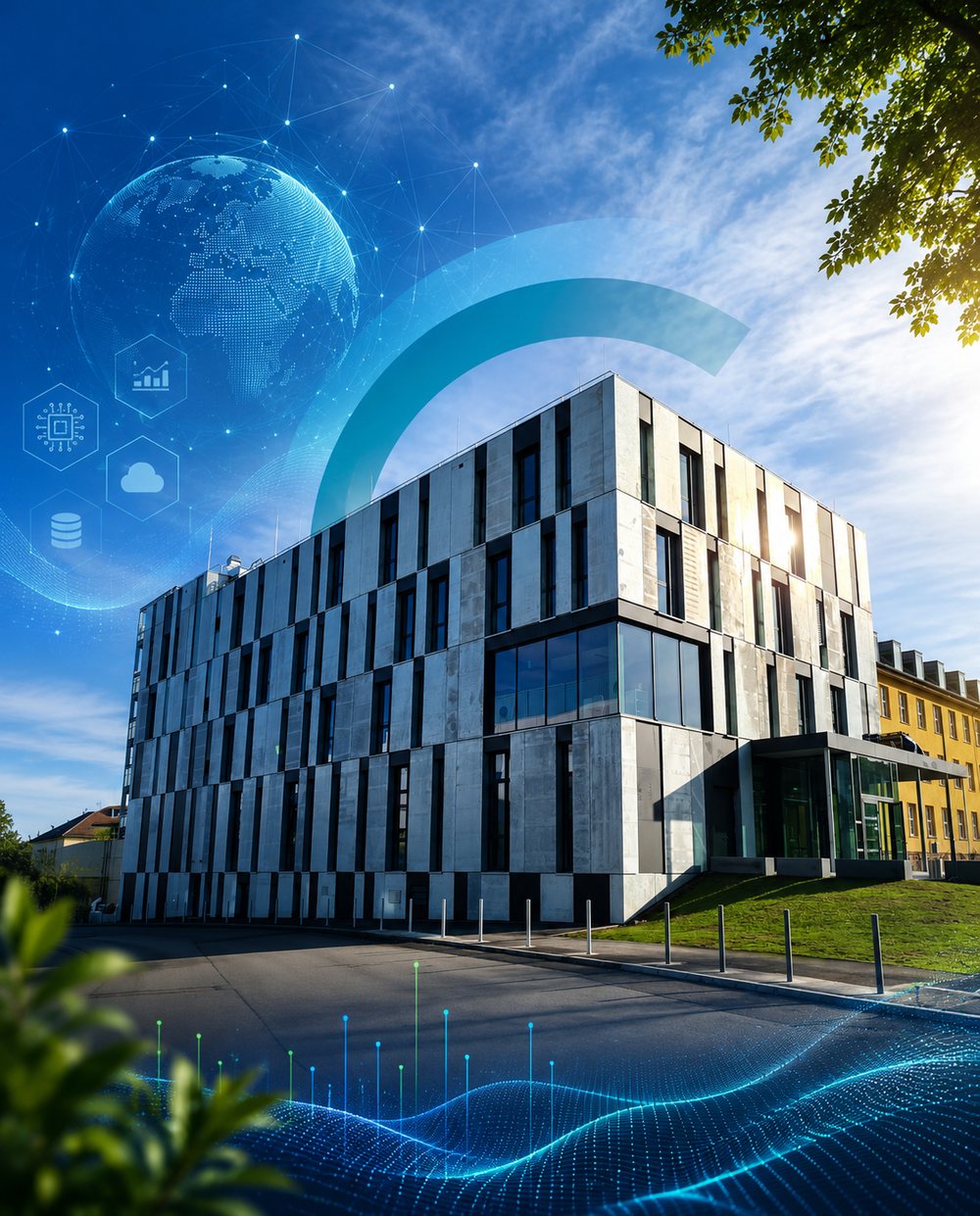

Master of Science in Digital Sciences for Transformation
Lead digital innovation and transformation across industries. The program combines digital technologies, business strategy, data-driven decision-making and innovation — with a strong focus on practical application and emerging technologies.
Reserve your spot
An informal session with the SEED team about the Scheer School master’s — what the program actually covers, whether your profile fits it, and what applying for the October 2026 intake involves.
- A 30-minute conversation with a SEED counsellor, not a sales call.
- A profile evaluation and program fit assessment before you commit.
- We call you back within 24 hours of booking.
Reserve Your Spot for the Digital Coffee Talk
Build expertise in AI, data & digital transformation, gain practical industry experience, and prepare for careers across sectors.
Note: You will receive a call from our counsellor to conduct a profile evaluation and program fit assessment before you confirm your Digital Coffee Talk booking, within 24 hours.
Master of Science: Digital Sciences for Transformation
The Master of Science in Digital Sciences for Transformation prepares students to lead digital innovation and transformation across industries. The program combines digital technologies, business strategy, data-driven decision-making, and innovation to help students understand how organisations can successfully navigate the evolving digital landscape. With a strong focus on practical application and emerging technologies, students develop the skills to drive meaningful digital change and build careers in areas such as digital transformation, technology consulting, innovation, data, and digital business.
Quality assured
System accredited and quality assured by Saarland University. Recognised across Germany and Europe.
Located in Germany
Saarbrücken campus with strong industry partnerships and an expert network across Europe.
English taught
All 120 ECTS delivered in English across two years, with German language support alongside.
Who can apply
Academic background
- Bachelor’s degree in any field
- No official minimum GPA
- Around 3.0/4.0 (75%) is a strong profile
- Lower grades considered holistically
Experience & English
- ≥1 year relevant work experience
- B2 English level or above
- Clear motivation for digital transformation
- Willing to attend the Saarbrücken campus
Vocational route — A recognised vocational qualification and ≥2 years of relevant experience may also qualify.
What you’ll study
Interdisciplinary curriculum designed around employer needs for digital transformation.
AI & data science
Artificial intelligence, machine learning, data analysis, coding, and automation technologies.
Business & innovation
Digital transformation, business models, finance, innovation, and strategic thinking.
Leadership & context
Communication, organisational change, law, ethics, and German language for a career in Germany.
Real transformation work
Solve practical challenges with companies and public institutions. Apply learning to real-world digital transformation scenarios — not just theoretical cases.
How the program works
Learning rhythm
- Around 20 hours study effort per week
- Around 30 attendance days per semester in Saarbrücken
- Online sessions + self-study + in-person attendance
- Modules run 4–8 weeks; max 3 concurrent modules
Assessment
- Projects and continuous work (primary)
- Presentations and practical tasks
- Master thesis (the only major written paper)
- No traditional exams
Important: blended, not fully online
The program is formally full-time with a blended structure providing flexibility. You must be willing and able to attend in Saarbrücken regularly and engage in project work. Not suitable for those seeking a fully online degree.
Why choose this program
Small international community
Work closely with peers from different backgrounds, industry experts, mentors, and practitioners.
Career & arrival support
Housing, visa guidance, onboarding, CV development, interview prep, and career planning.
German for employability
English modules plus German language learning for daily life and career opportunities in Germany.
Modern assessment
Focus on projects and real-world application rather than traditional written exams.
Costs and timeline
All figures are indicative and are set by the university and the German authorities. They may change and should be confirmed before you apply.
Career opportunities
Roles after graduation
- Digital transformation consultant
- AI–ML strategy lead
- Data science manager
- Innovation lead
- Product manager (tech)
- Entrepreneur–founder
Industry sectors
- Healthcare & life sciences
- Finance & fintech
- Manufacturing & Industry 4.0
- Consulting & professional services
- Tech startups & scale-ups
- Government & public sector
What to prepare
Application documents required.
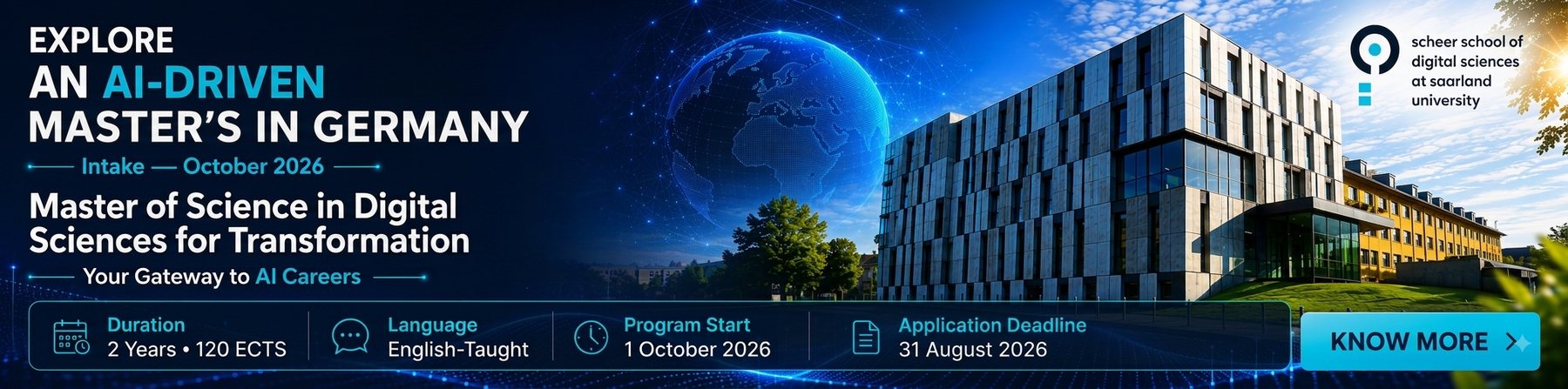
Why Scheer School of Digital Sciences?
The Scheer School of Digital Sciences is a joint initiative of Saarland University and the August-Wilhelm Scheer Institute, bringing together academic excellence, research, and practical industry expertise.
The School focuses on preparing students for the opportunities and challenges of digital transformation through an interdisciplinary approach that connects technology, business, and innovation. With a strong emphasis on practical application, students gain the knowledge and capabilities needed to understand emerging technologies, solve real-world challenges, and contribute to digital transformation across industries.
The Master of Science in Digital Sciences for Transformation offers a future-focused learning experience designed to help students build relevant skills and thrive in a rapidly evolving digital economy.
Eligibility & admission requirements
Who is eligible to apply for the MSc in Digital Sciences for Transformation?
Applicants should have a bachelor’s degree with at least 1 year of relevant professional experience. A recognised vocational qualification with 2+ years of relevant experience may also be considered.
Is there a minimum GPA requirement?
There is no official minimum GPA. A result around 3.0/4.0 or 75% is considered a strong profile for prioritisation, but applications may be assessed holistically.
What work experience is required?
Applicants through the bachelor’s route should have at least 1 year of relevant professional experience.
What English proficiency is required?
The program requires B2-level English proficiency, as academic modules are taught in English. Accepted evidence can include IELTS, TOEFL, Cambridge, English-medium education, or another accepted record.
What documents do I need to apply?
You should prepare your CV, university degree and transcript, proof of English proficiency, and passport or national ID.
Do I need an equivalence document for an international degree?
If you hold an international qualification, you may need to provide documentation supporting its equivalence with a German degree.
Is health insurance required when I submit my application?
No. The health insurance certificate can be submitted later. However, health insurance is mandatory in Germany and may be required for the visa process and enrolment.
Is there an admission test?
Yes. The admission test consists of 24 multiple-choice questions across 6 thematic sections, with a 60% pass mark.
How is the admission test conducted?
The test takes 30 minutes, is conducted online through Learning World, and is supervised via Microsoft Teams. Candidates need a laptop or PC, camera, stable internet, and valid photo ID.
Is meeting the eligibility requirements a guarantee of admission?
No. Meeting the requirements indicates a relevant profile, but the final admission decision remains with the Scheer School.
Still deciding?